
Filter by jurisdictions
- ASEAN 1
- Asia Pacific 26
- Australia 5
- Brazil 2
- Calif 1
- California 8
- Canada 1
- China 1
- Denmark 1
- Draft proposal 32
- EU 11
- Enforcement 1
- Europe 15
- Final rules 37
- France 1
- Illinois 1
- India 1
- Indonesia 1
- Japan 2
- Latin America 4
- Minnesota 2
- New Jersey 2
- New Mexico 1
- New York 3
- New Zealand 1
- North America 1
- Oceania 6
- Peru 2
- Philippines 5
- Singapore 1
- South Korea 1
- Southeast Asia 10
- Taiwan 4
- UK 3
- US federal 3
- US states 16
- Ukraine 1
- United States 20
- Vietnam 5
- Virginia 1
- Washington D.C. 1
- Washington state 1
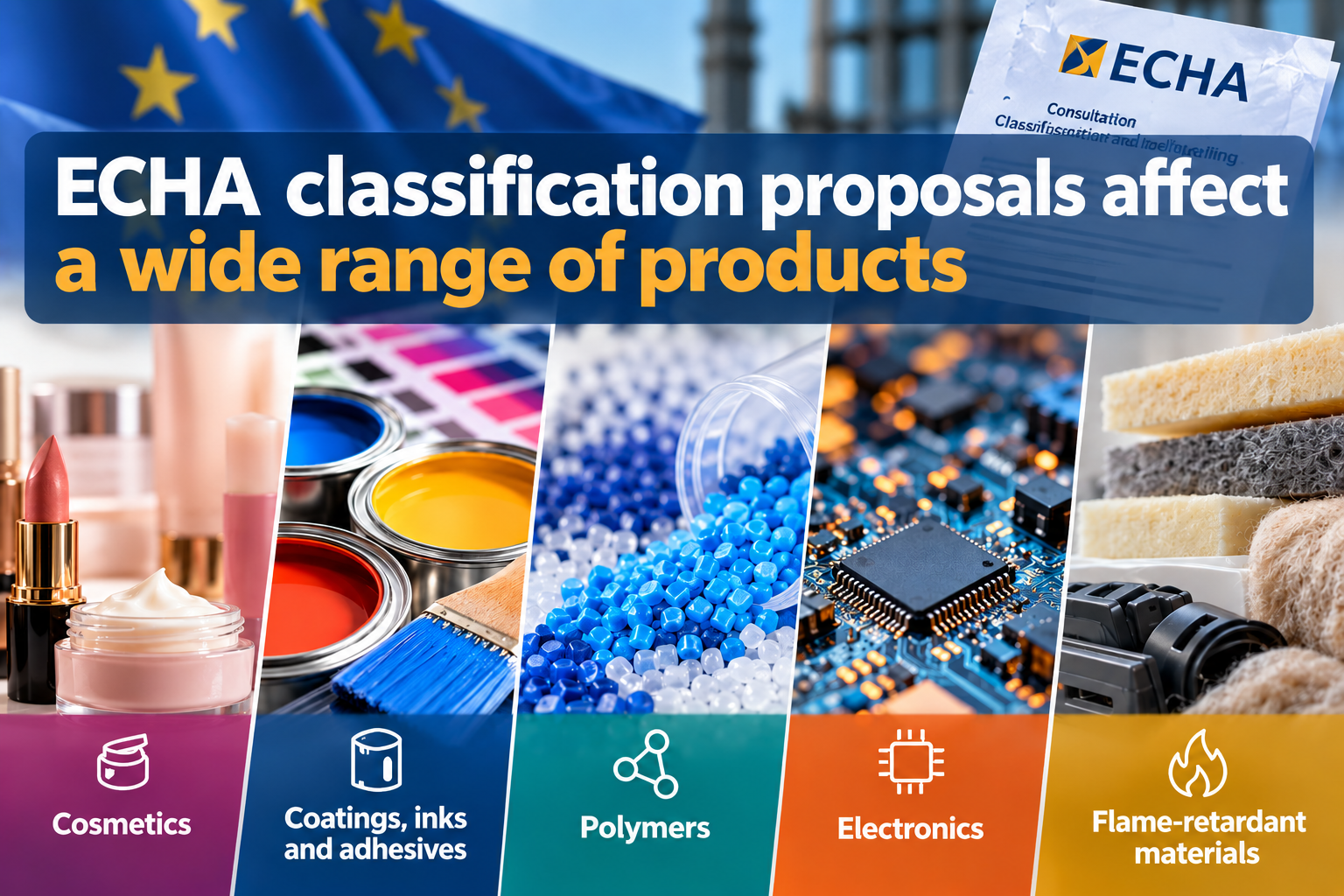
ECHA classification proposals put cosmetics, coatings, polymers, and electronics in focus
ECHA is consulting on new classifications for ethyl 4-(dimethylamino)benzoate, 2-ethylhexyl 4-(dimethylamino)benzoate and 3-methylbutyl 4-(dimethylamino)benzoate, as well as chlorendic anhydride and eight phthalic anhydrides. The proposals cover reproductive toxicity, suspected carcinogenicity, and respiratory sensitization and could affect cosmetics, electronics, coatings, inks, adhesives, polymers, and flame-retardant materials.

Beyond the Scrapyard: How Europe’s New Vehicle Circularity Rules Will Reshape Automotive Business
Compliance with Europe’s new vehicle circularity rules will depend on decisions made years before the deadlines arrive. This analysis examines how manufacturers, suppliers and recyclers must rethink material sourcing, product design, supplier contracts, regulatory data and investment planning to prepare for the new system.

EU’s New End-of-Life Vehicles Regulation Extends Circularity Rules From Vehicle Design to Recycling
The EU’s new End-of-Life Vehicles Regulation (Regulation (EU) 2026/1738) moves automotive circularity beyond the scrapyard and into vehicle design, manufacturing, and supply-chain management. With phased requirements beginning in 2028, companies must prepare for recycled-content targets, digital vehicle passports, expanded producer responsibility, and tighter export controls.