
Filter by jurisdictions
- ASEAN 1
- Asia Pacific 25
- Australia 5
- Brazil 2
- California 5
- China 1
- Denmark 1
- Draft proposal 28
- EU 8
- Enforcement 1
- Europe 12
- Final rules 31
- France 1
- Illinois 1
- India 1
- Indonesia 1
- Japan 2
- Latin America 4
- Minnesota 2
- New Jersey 2
- New Mexico 1
- New York 3
- New Zealand 1
- North America 1
- Oceania 6
- Peru 2
- Philippines 5
- Singapore 1
- South Korea 1
- Southeast Asia 10
- Taiwan 3
- UK 3
- US federal 2
- US states 16
- Ukraine 1
- United States 18
- Vietnam 5
- Virginia 1
- Washington D.C. 1
- Washington state 1

Vietnam’s Regulatory Reset Raises Near-Term Risks for Global Businesses
Vietnam is undergoing a sweeping regulatory reset. Government restructuring, a new chemicals framework, risk-based product controls, digital labeling and expanding producer responsibility are changing how companies manufacture, import and sell products in the country. For businesses, the biggest challenge may not be any single rule—but the speed at which the entire compliance landscape is changing.
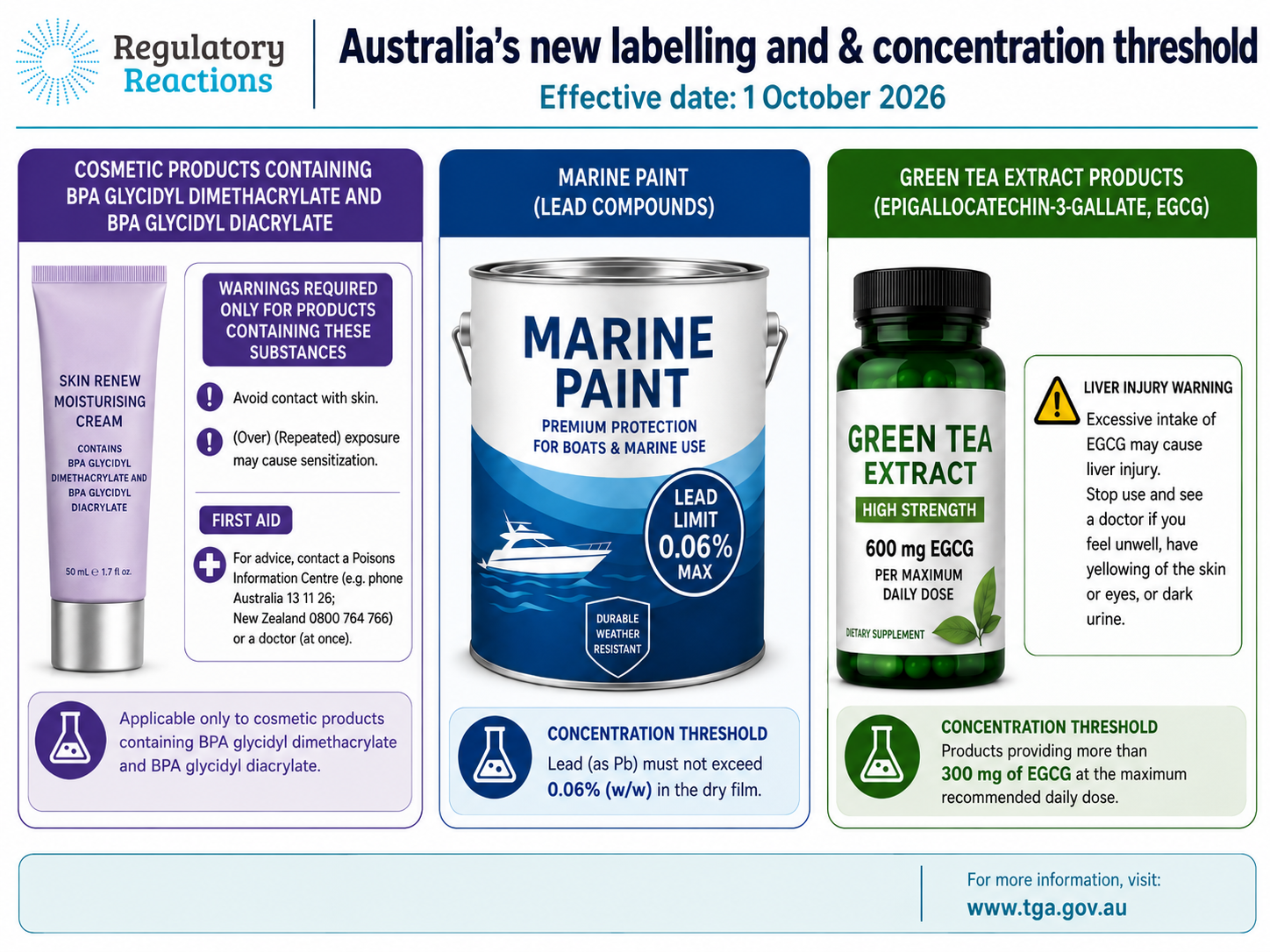
Australia’s compliance deadline hits cosmetics, green tea extracts, and marine paints
Australia’s 1 October 2026 deadline will require new label statements for cosmetics containing BPA glycidyl dimethacrylate or BPA glycidyl diacrylate, liver warnings for high-dose green tea extracts and a lower lead limit for anti-fouling paints.

Brazil adopts long-awaited RoHS framework for electrical and electronic equipment (EEE)
Brazil has adopted its long-awaited RoHS framework, restricting ten substances (PBB, PBDE, mercury, cadmium, hexavalent chromium, lead, DEHP, BBP, DBP, and DIBP) in electrical and electronic equipment while introducing registration, self-declarations, and Portuguese-language documentation.
Australia tightens controls on retinal as cosmetic safety concerns grow
Australia now requires pre-market assessment for retinal used in cosmetics and other consumer products after AICIS identified developmental toxicity concerns. A related evaluation also flagged potential risks from cumulative exposure to retinol and several retinol esters in skincare and personal-care products.

Philippines adds 81 chemicals to national inventory
The Philippines has added 81 chemicals to PICCS, exempting listed substances from the PMPIN process while leaving other regulatory controls in place. Companies should verify chemical names and CAS numbers carefully, especially as the official portal had not yet reflected the new entries at the time of publication.

Minnesota PFAS Reporting Deadline Nears as Extension and Waiver Requests Close August 16
Manufacturers selling products in Minnesota face an August 16, 2026, deadline to mail requests for additional reporting time or a waiver, followed by the September 15 deadline for submitting PFAS-in-products reports.
Illinois Enacts 2028 Ban on PFAS and Other Chemicals in Cosmetics
Illinois will prohibit cosmetics containing specified PFAS, formaldehyde-related substances, phthalates, mercury, parabens, and certain hair-dye chemicals beginning 1 July 2028, before expanding the ban to all intentionally added PFAS on 1 January 2032.
Peru’s new chemical notification and reporting rules: What companies must know
Peru’s new chemical framework creates staggered notification and RENASQ reporting duties for manufacturers and importers, including chemical identity, classification, labels, SDS, annual quantities and risk evaluations.
Peru’s New GHS Rules: What companies need to know about classification, labels and safety Data Sheets
Peru’s new chemical regulation requires companies to self-classify substances, prepare Spanish GHS labels and safety data sheets, follow label sizing rules, manage small-container requirements and update documents when hazards change.

Vietnam cuts EPR contribution rates and simplifies extended producer filings for batteries, electronics, packaging, and other consumer products
Vietnam has lowered several EPR recycling contribution rates, consolidated producer filings and shifted administrative costs away from the Fs calculation under Circular 24/2026. The changes affect packaging, batteries, electronics, vehicles and other covered products.
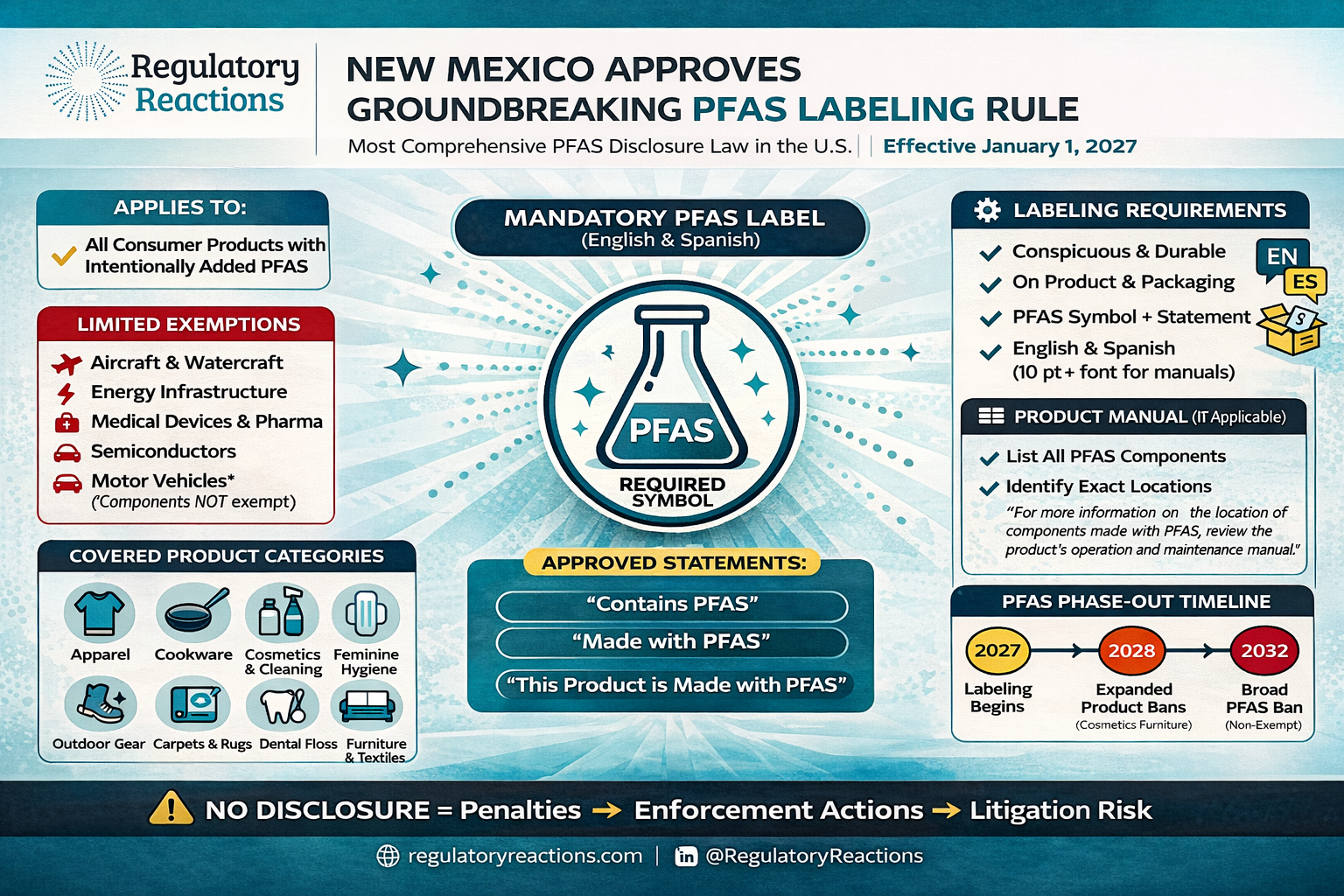
New Mexico approves sweeping PFAS Labeling Rule for Consumer Products
New Mexico mandates PFAS labels on most consumer products by 2027, creating the most comprehensive U.S. disclosure framework.
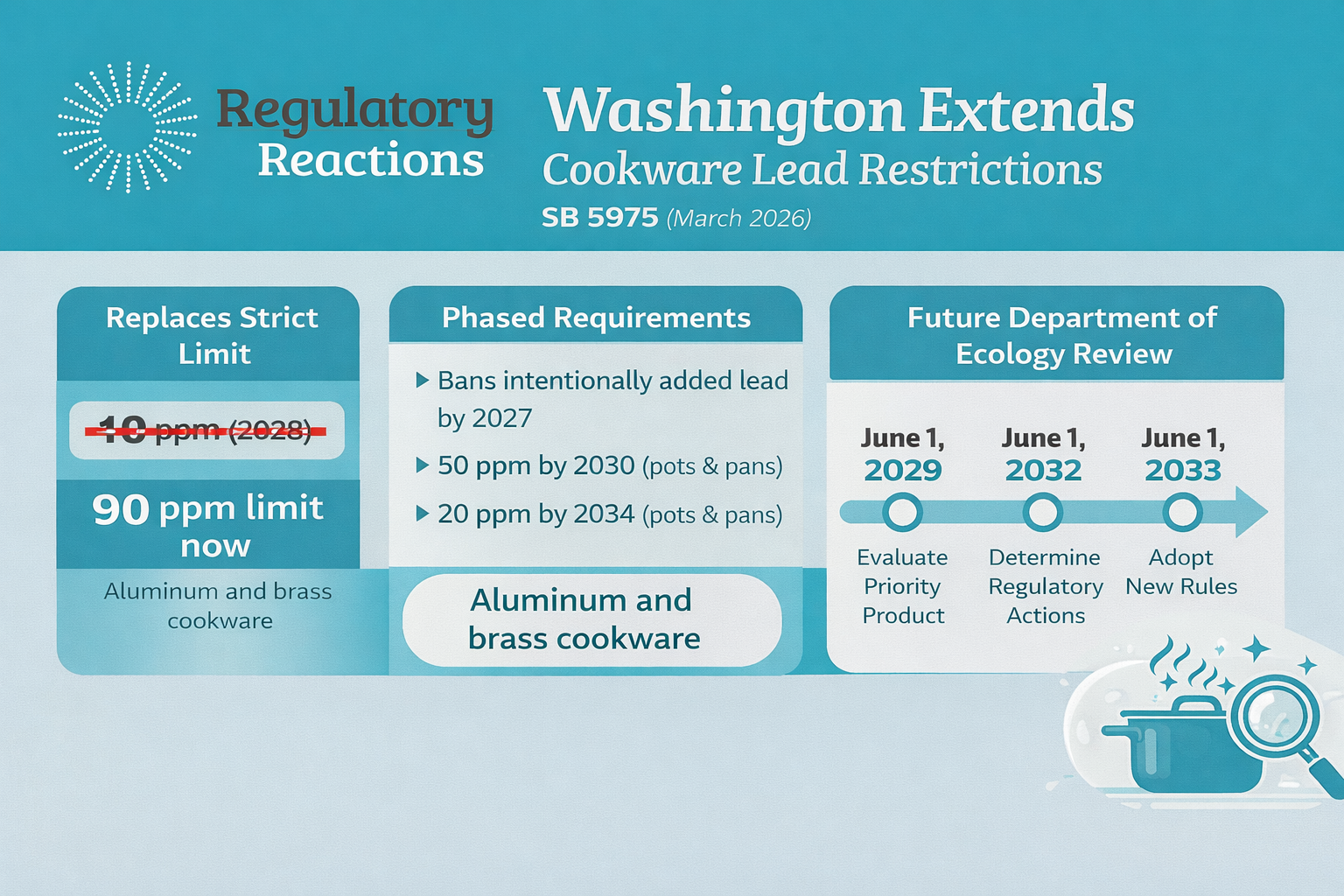
Washington Revises Lead Limits for Cookware, Extends Timeline
Washington enacted SB 5975, replacing a planned 10 ppm cookware lead limit for 2028 with phased limits of 50 ppm (2030) and 20 ppm (2034).
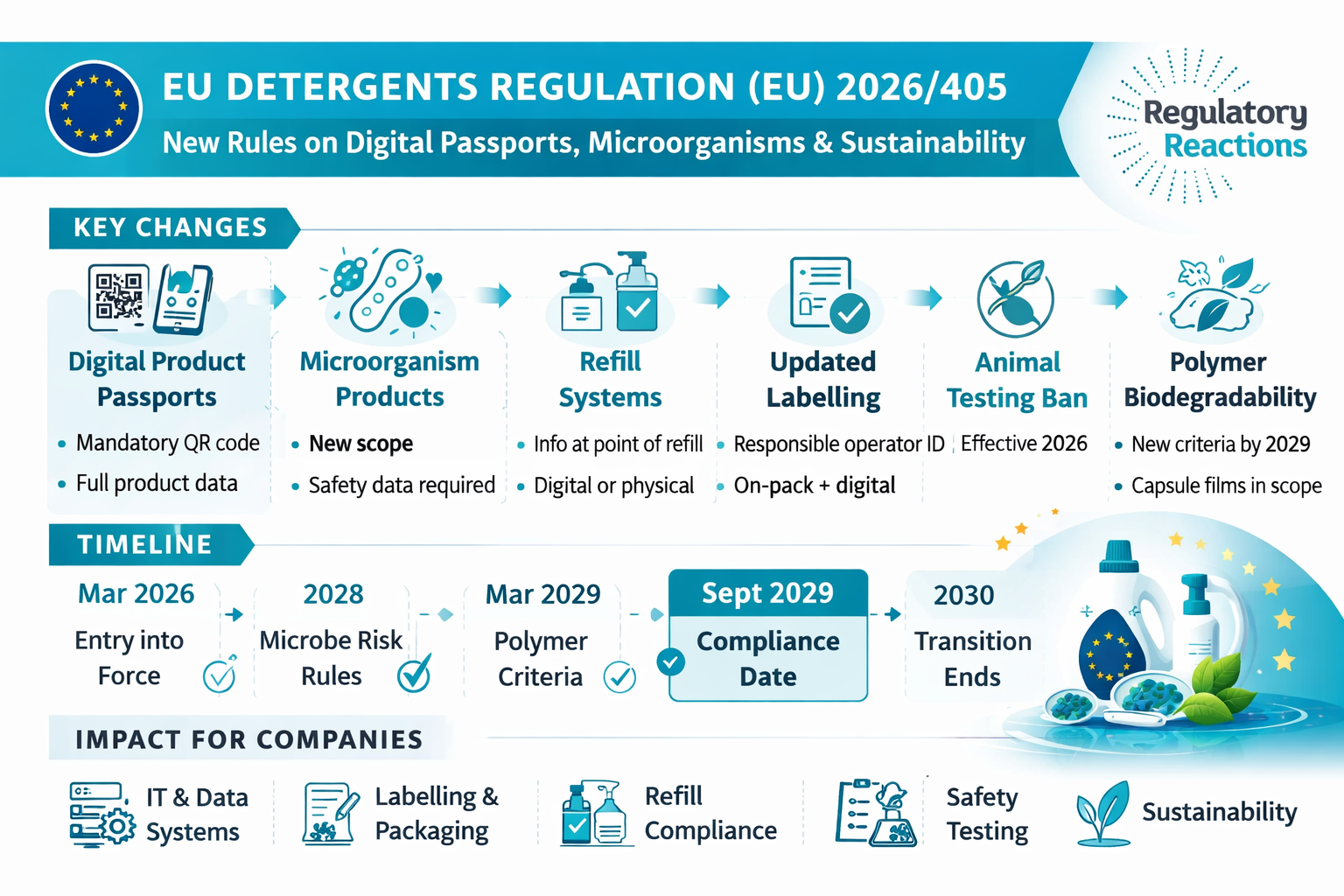
EU overhauls detergent rules, requiring Digital Product Passports, banning animal testing, expanding product types and biodegradability criteria for polymer films
EU adopts Regulation (EU) 2026/405 replacing the 2004 Detergents Regulation, introducing digital product passports and new compliance rules.
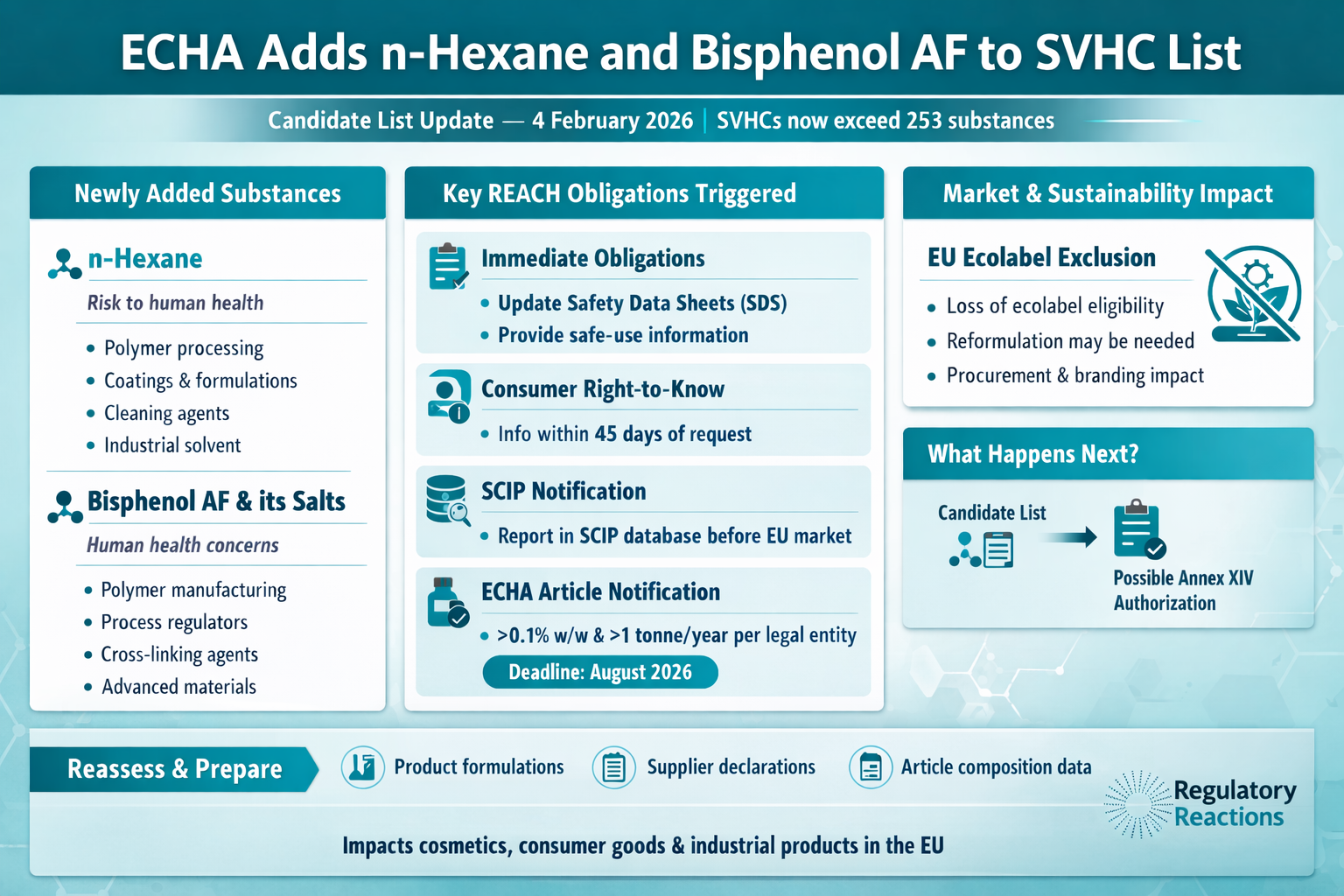
ECHA added n-Hexane and Bisphenol AF to the SVHC list
ECHA adds N-Hexane and Bisphenol AF to the EU SVHC List, triggering immediate compliance duties for downstream users and product brands containing the chemicals
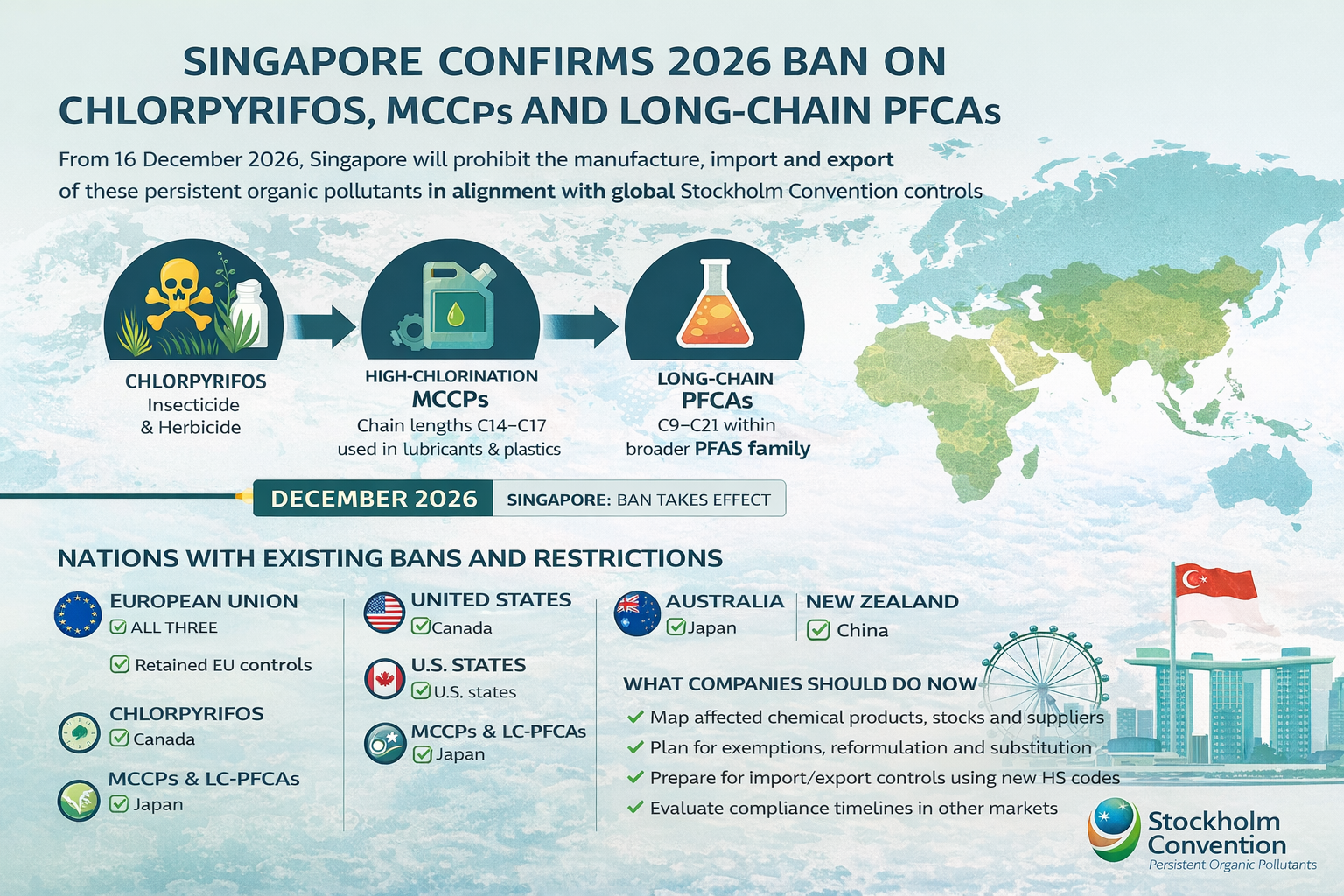
Singapore confirms 2026 ban on Chlorpyrifos, MCCPs and LC -PFCAs under Stockholm Convention
Singapore will ban chlorpyrifos, MCCPs and LC-PFCAs from December 2026, aligning with global Stockholm Convention controls.
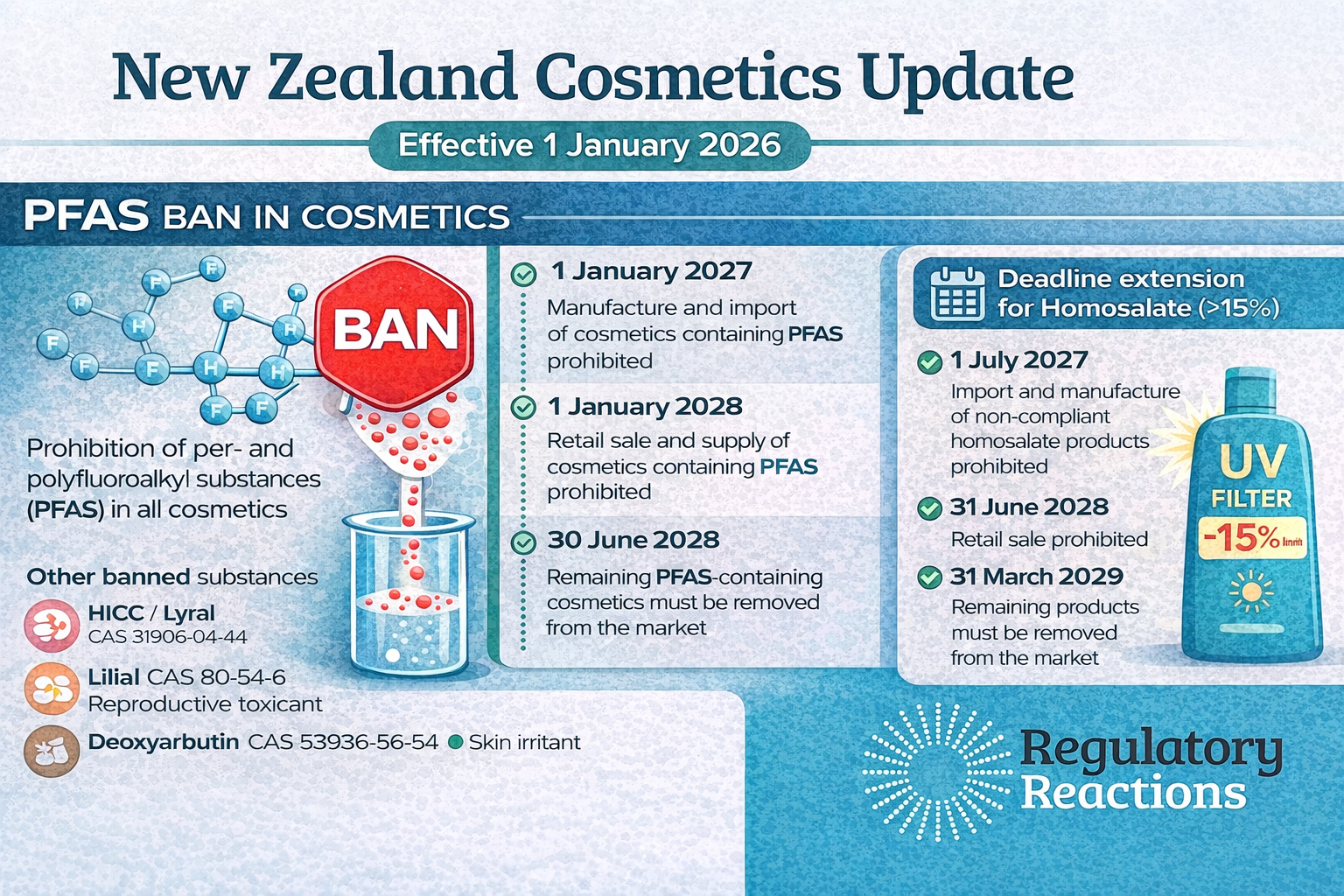
New Zealand phases out PFAS and imposes restrictions on additional chemicals in cosmetic products
New Zealand cosmetics rule revisions took effect 1 January 2026, banning PFAS, lilial, and deoxyarbutin in cosmetics.
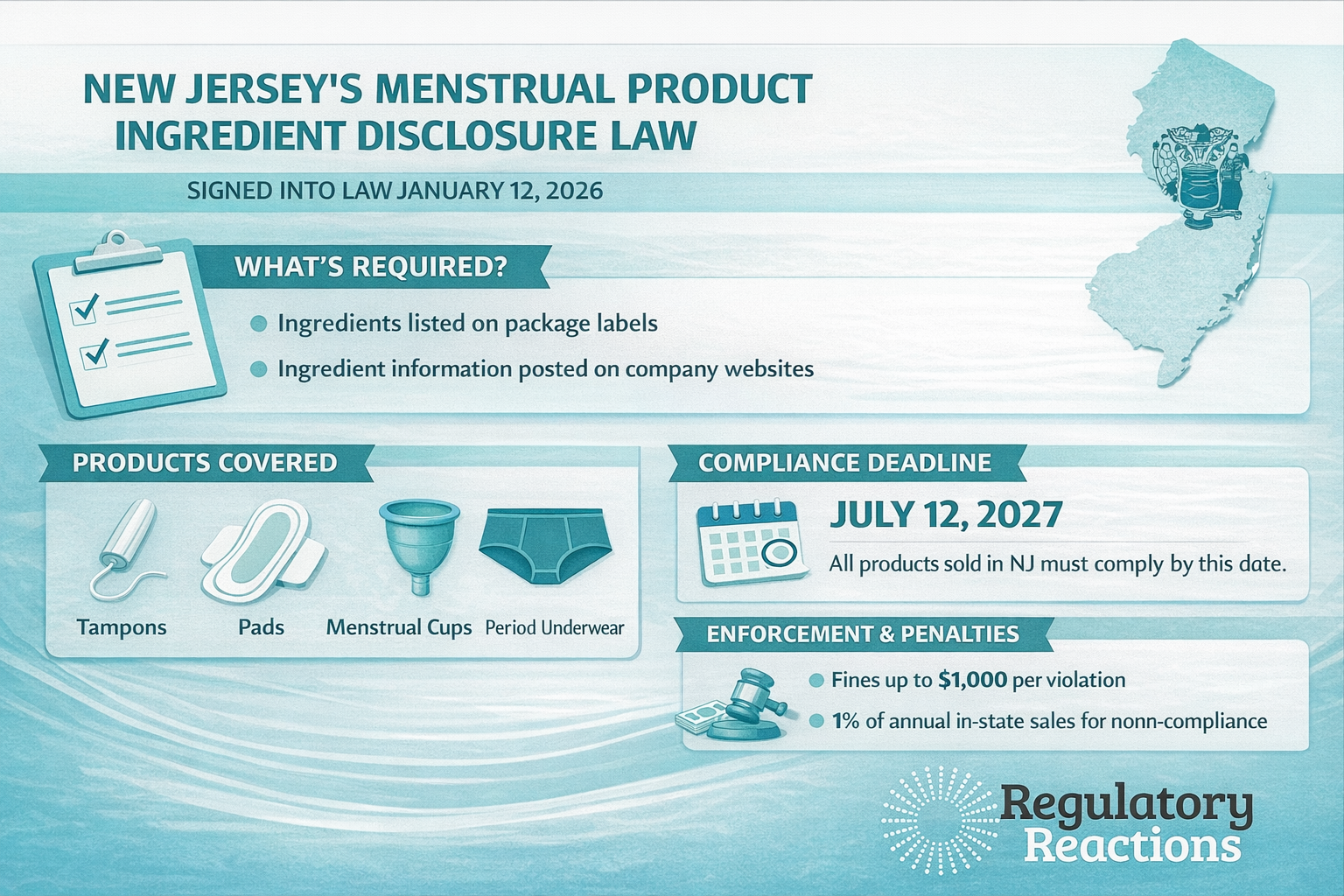
New Jersey requires mandatory ingredient disclosure in menstrual products
New Jersey’s new law requires ingredient disclosure on menstrual product packaging and online. Manufacturers must comply by 12 July 2027.
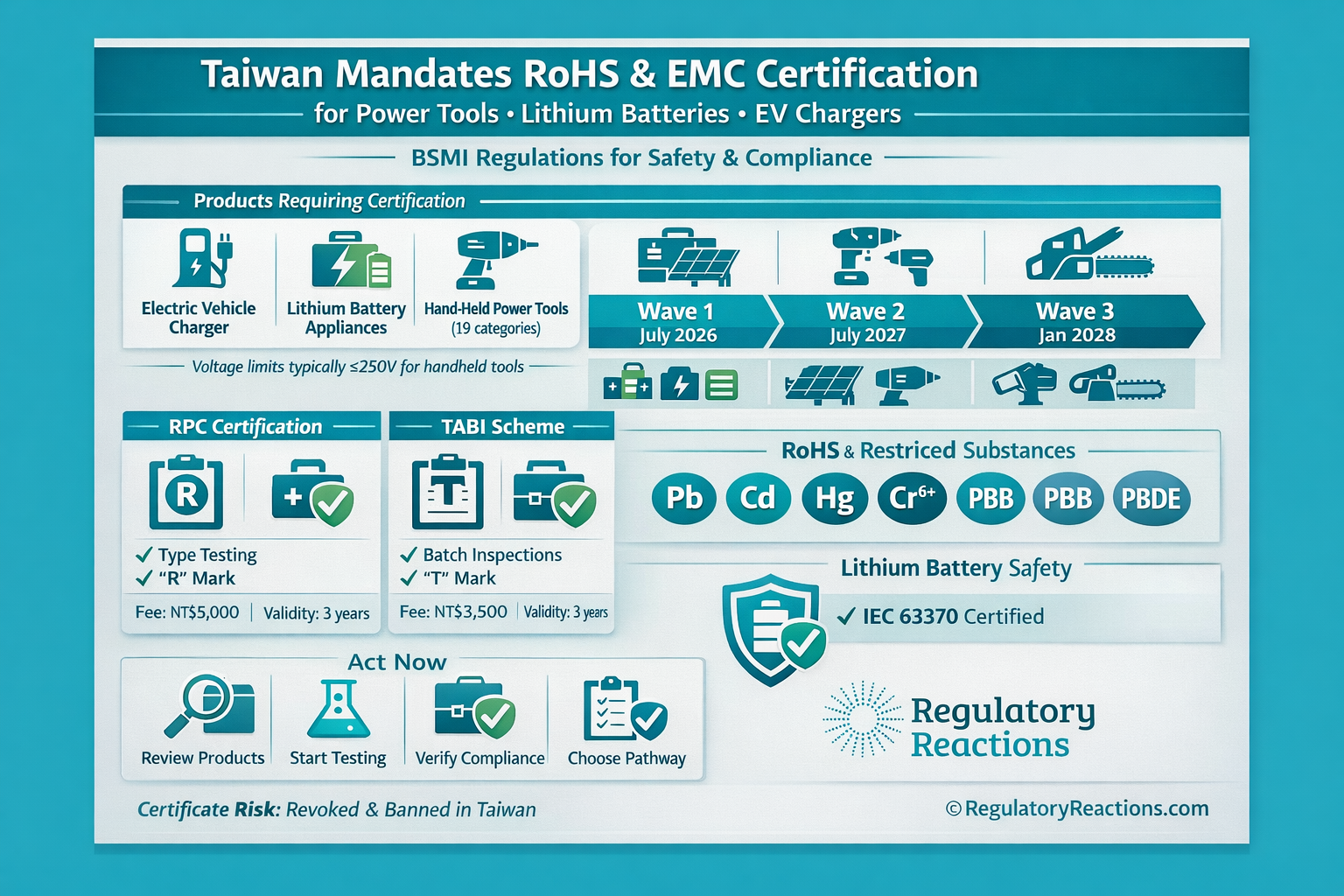
Taiwan requires mandatory ROHS and EMC certification for electric handheld power tools, lithium batteries, and EV chargers
Taiwan requires mandatory EMC and ROHS certification and inspection for handheld power tools. Compliance deadlines commence on
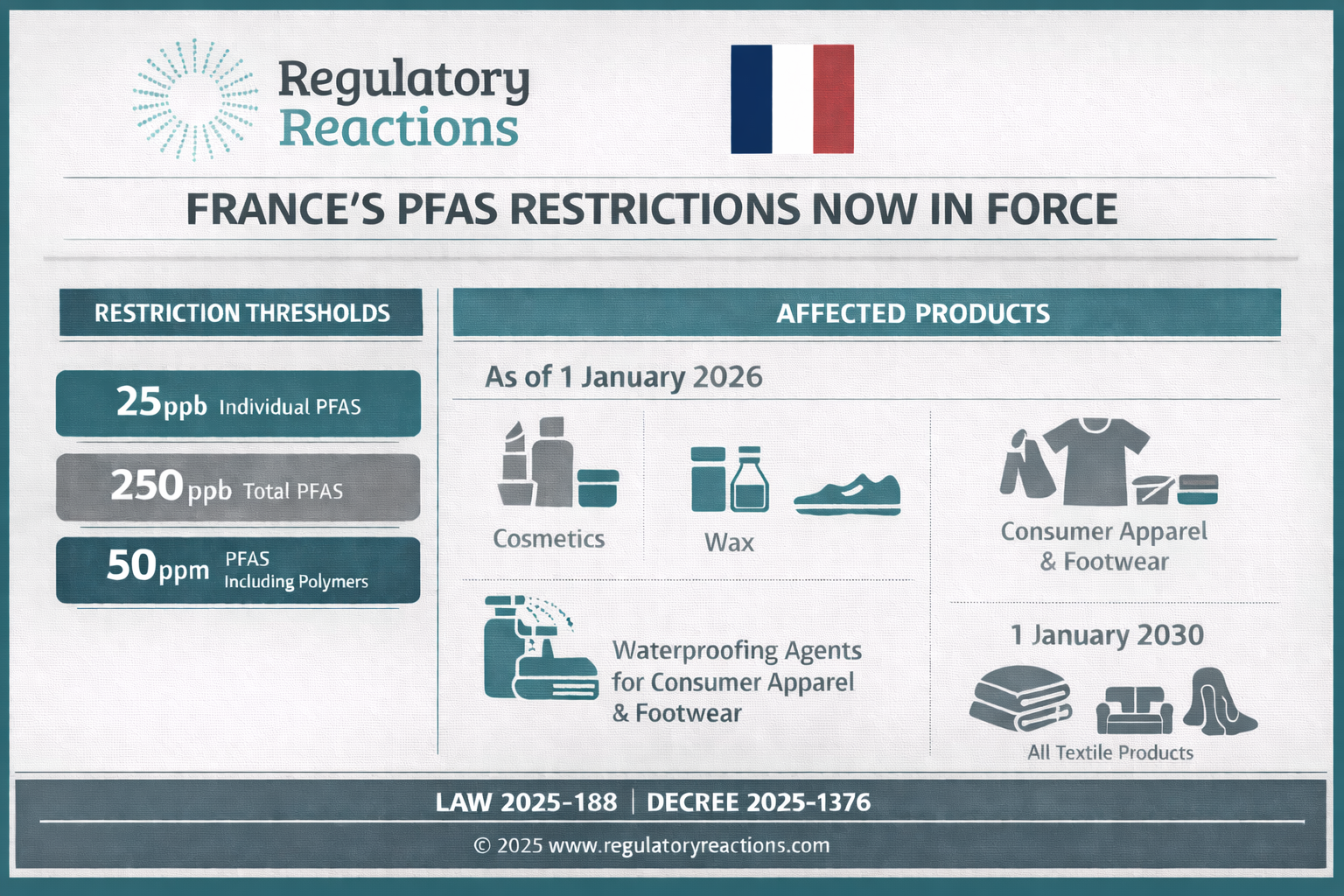
France implements measurable PFAS limits across cosmetics, textiles, wax
France’s PFAS law now in force sets strict product bans and measurable limits for cosmetics, consumer apparel & footwear, wax, and textiles.
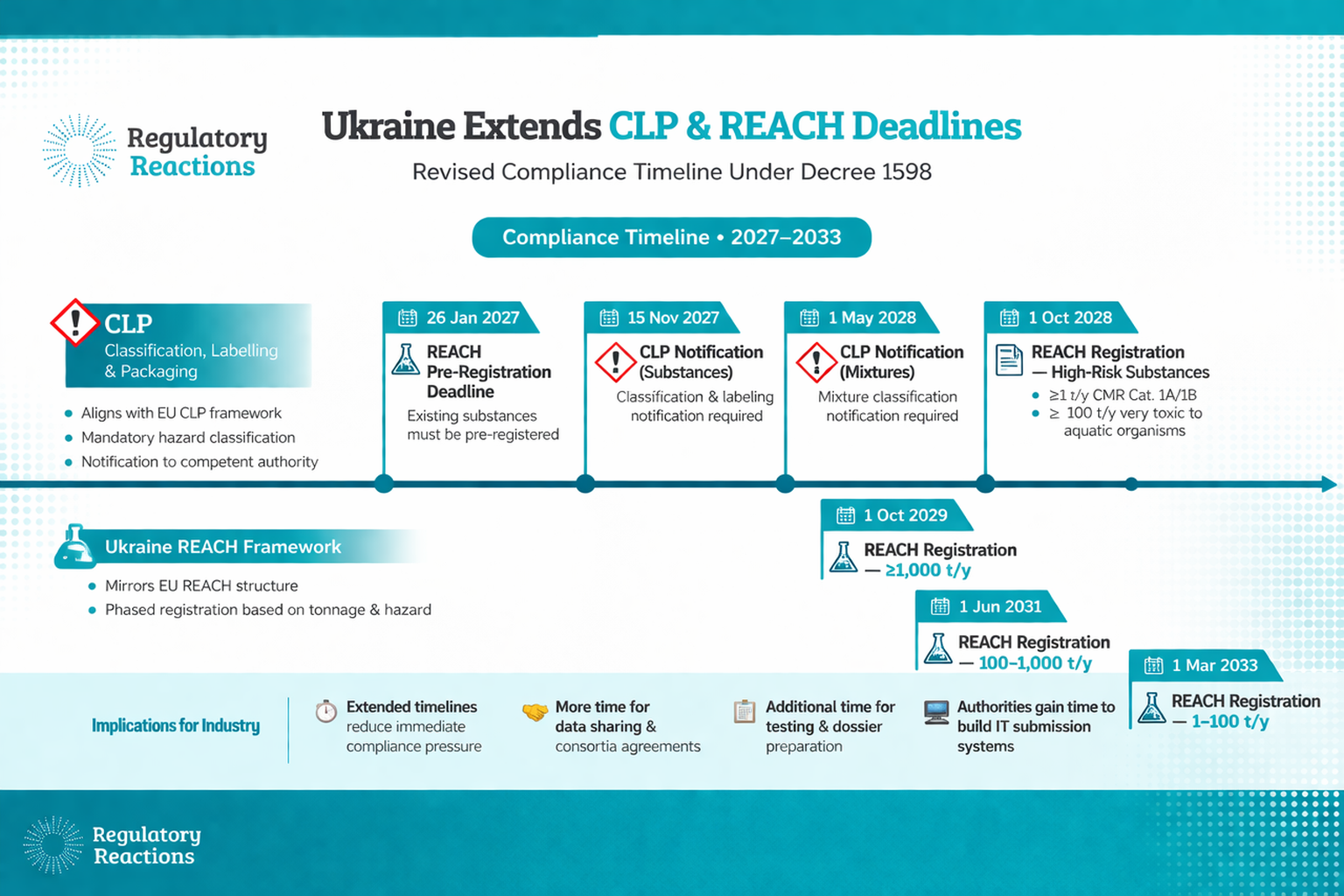
Ukraine extends deadlines for CLP and REACH compliance
Ukraine delays CLP and REACH deadlines to 2027–2033, giving industry more time for CL notification, substance registration, data sharing, and compliance.