
Filter by jurisdictions
- ASEAN 1
- Asia Pacific 25
- Australia 5
- Brazil 2
- California 5
- China 1
- Denmark 1
- Draft proposal 28
- EU 8
- Enforcement 1
- Europe 12
- Final rules 31
- France 1
- Illinois 1
- India 1
- Indonesia 1
- Japan 2
- Latin America 4
- Minnesota 2
- New Jersey 2
- New Mexico 1
- New York 3
- New Zealand 1
- North America 1
- Oceania 6
- Peru 2
- Philippines 5
- Singapore 1
- South Korea 1
- Southeast Asia 10
- Taiwan 3
- UK 3
- US federal 2
- US states 16
- Ukraine 1
- United States 18
- Vietnam 5
- Virginia 1
- Washington D.C. 1
- Washington state 1
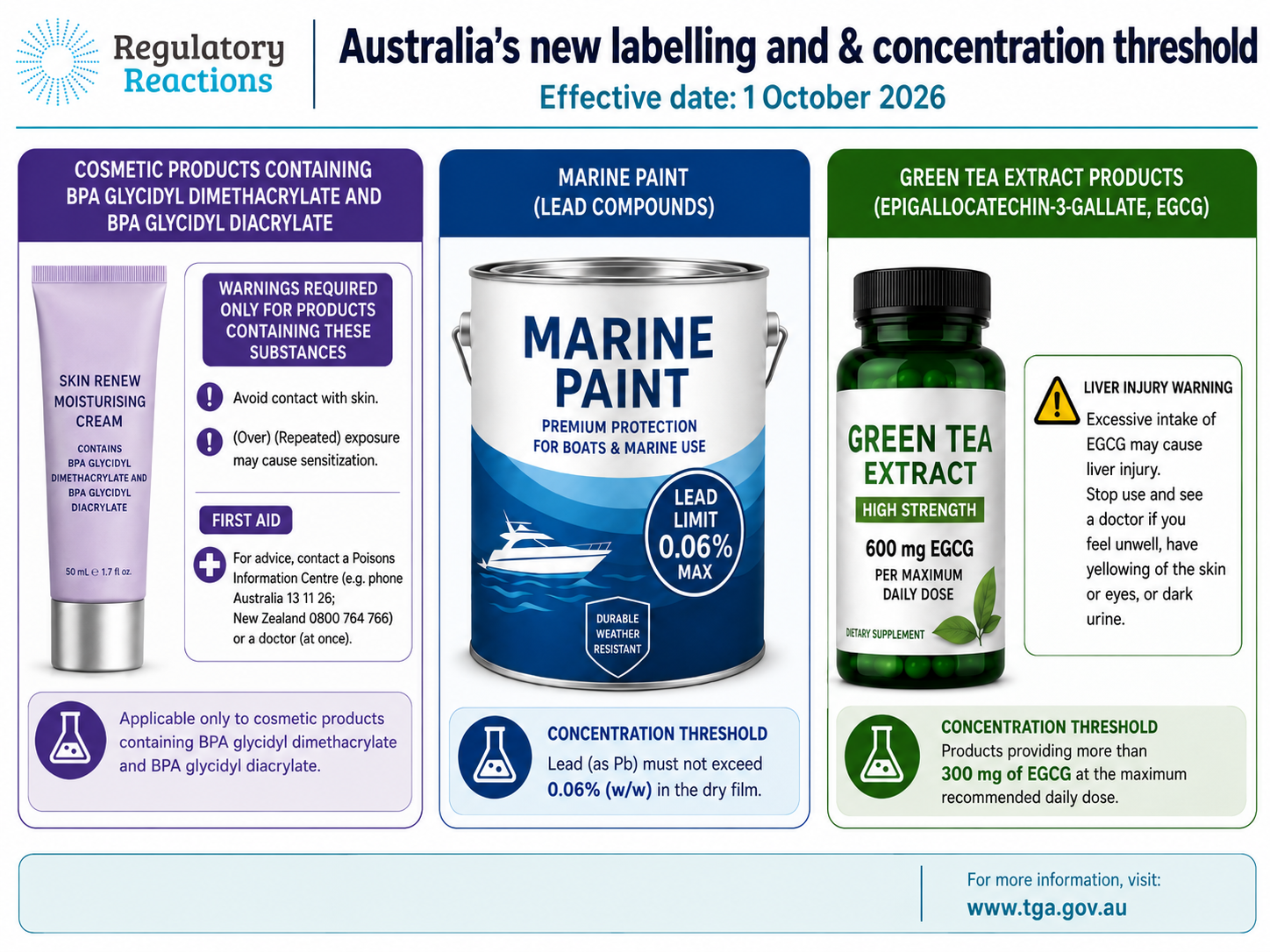
Australia’s compliance deadline hits cosmetics, green tea extracts, and marine paints
Australia’s 1 October 2026 deadline will require new label statements for cosmetics containing BPA glycidyl dimethacrylate or BPA glycidyl diacrylate, liver warnings for high-dose green tea extracts and a lower lead limit for anti-fouling paints.

Brazil adopts long-awaited RoHS framework for electrical and electronic equipment (EEE)
Brazil has adopted its long-awaited RoHS framework, restricting ten substances (PBB, PBDE, mercury, cadmium, hexavalent chromium, lead, DEHP, BBP, DBP, and DIBP) in electrical and electronic equipment while introducing registration, self-declarations, and Portuguese-language documentation.
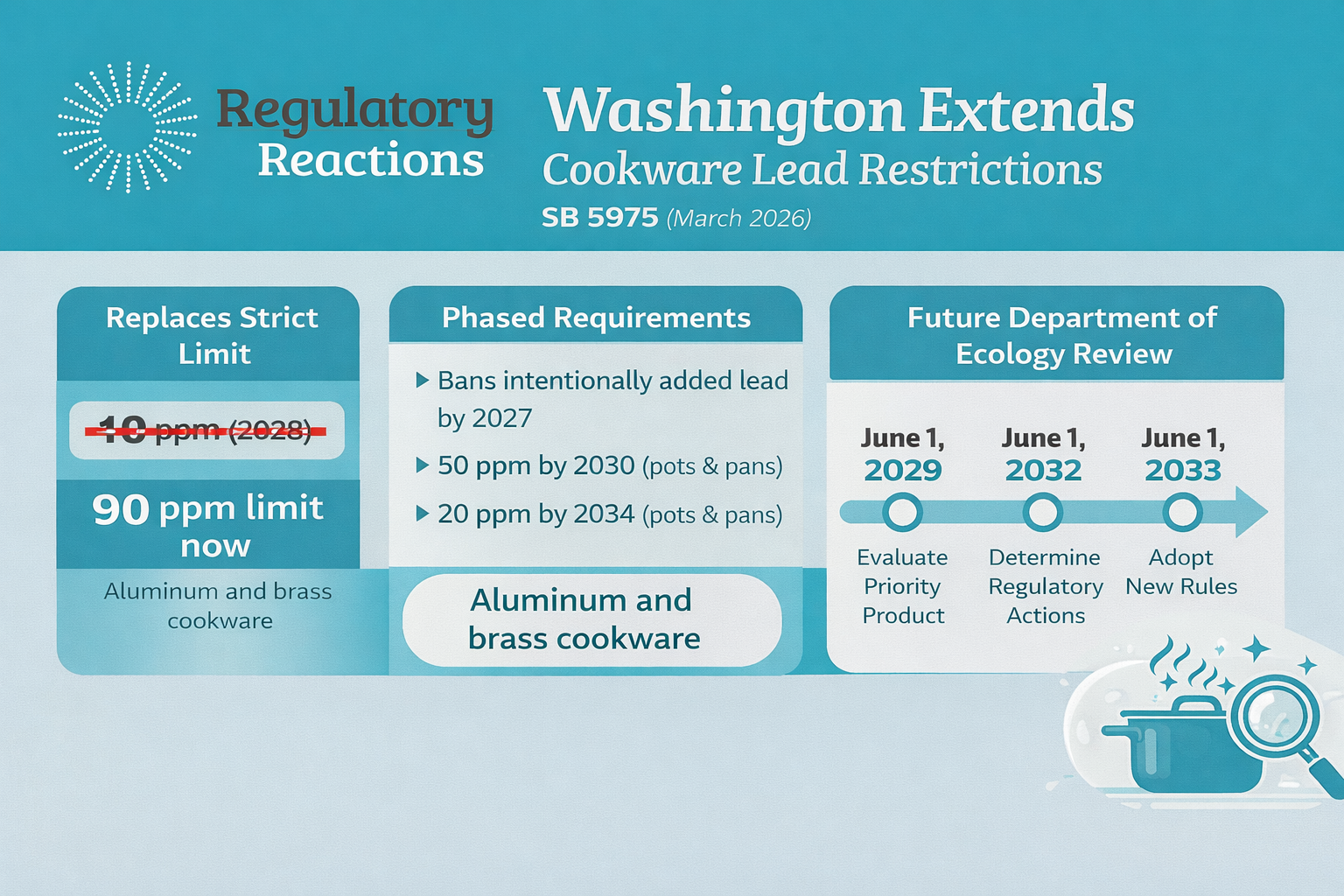
Washington Revises Lead Limits for Cookware, Extends Timeline
Washington enacted SB 5975, replacing a planned 10 ppm cookware lead limit for 2028 with phased limits of 50 ppm (2030) and 20 ppm (2034).
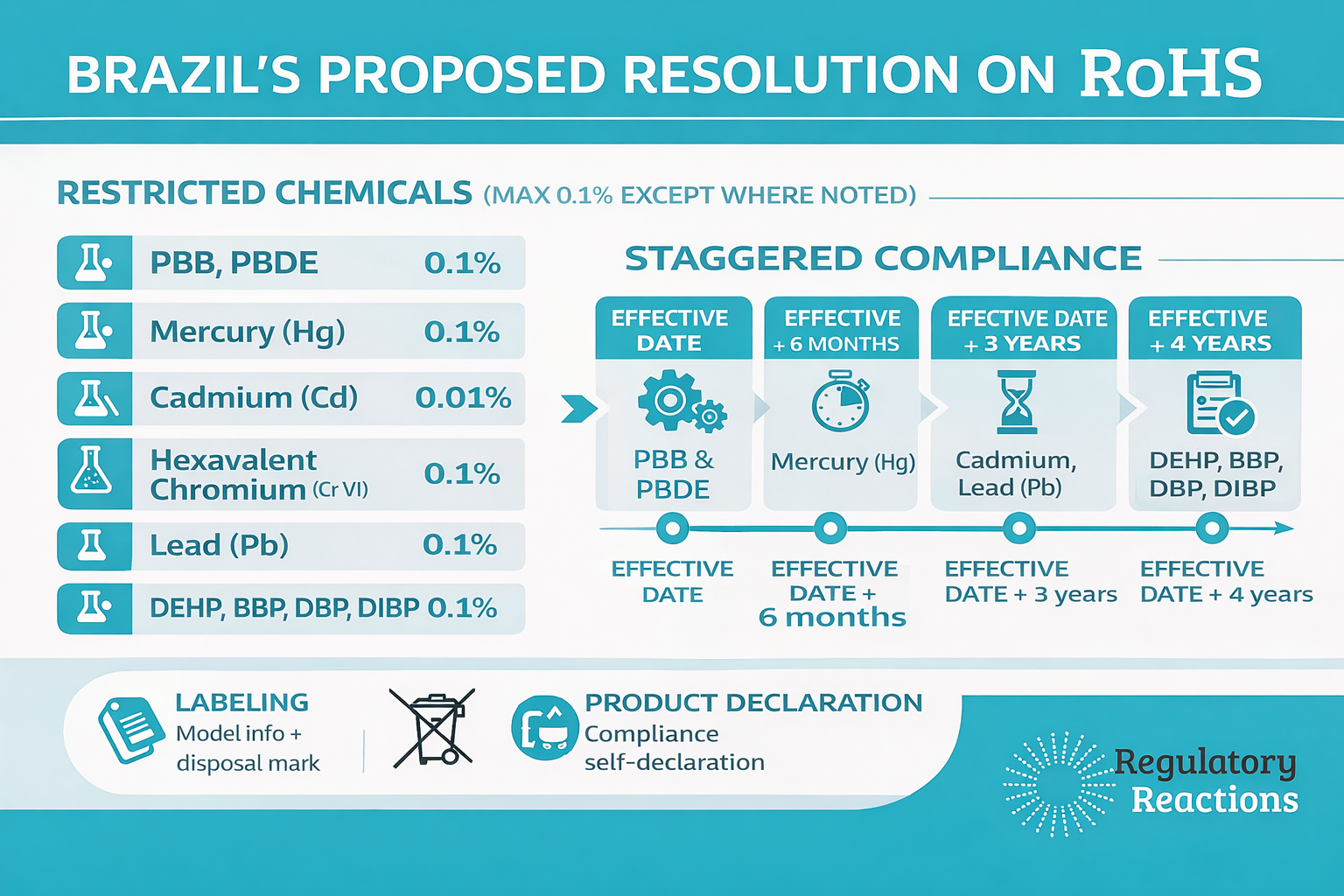
Brazil on track to implement RoHS-style restrictions on hazardous substances in electronics
Brazil updates draft proposal to implement RoHS-style EEE rules, adding exemptions, stricter registration, and phased deadlines aligned with EU standards.
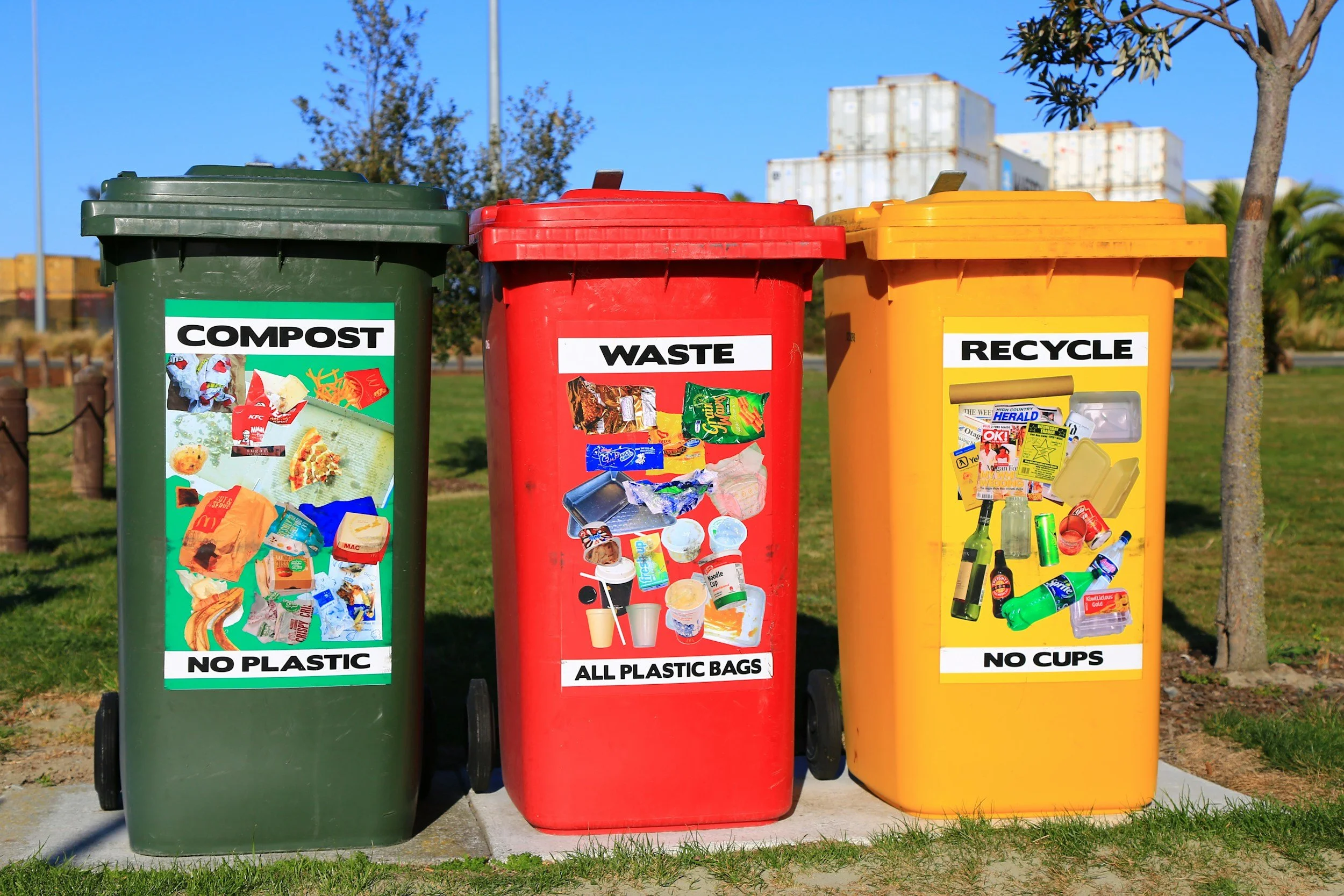
NY’s bill on producer responsibilities for packaging materials face uncertain fate amidst opposition from industries
The New York Senate passed S1464 on 28 May 2025, which seeks to implement extended producer responsibilities (EPR) for packaging and packaging materials. The the bill would require companies to register with the state, create collection systems and take back programs as well as eliminate hazardous chemicals from packaging and packaging materials.